Research

DV-12-06 Monitoring water quality in the Georges River

Jonathan Eaton Georges River Tidewater Association PO Box 336 Thomaston, ME 04861 207.354.2234 jonathan.eaton3@gmail.com The St. George River estuary has been listed as impaired by the Maine Department of Environmental Protection since 2000. The reason for the impairment are dissolved oxygen levels below what is required to protect the health of fish and other organisms. […]

Read more
A-12-04 The American Lobster in a Changing Ecosystem: A US-Canada Science Symposium

  27-30 November 2012 | Portland, Maine The conference steering committee would like to thank the 130+ people who attended the symposium, all the presenters, and sponsors. Final Conference Program  (PDF, 3.2 MB) November 2013 Canadian Journal of Fisheries and Aquatic Sciences Special Issue The symposium grew out of a consensus among the scientific community […]

Read more

DV-12-05 Restoring eelgrass by planting seeds: a novel experimental method

George Kidder III Mount Desert Island Biological Laboratory Box 35, Old Bar Harbor Road Salisbury Cove, ME 04672 207.288.9880 x421 gkidder@mdibl.org Eelgrass is a valued component of shallow-water estuaries that provides habitat for many species, including juvenile mussels and fish, and maintains clean water. Eelgrass beds are in decline in many areas for various and […]

Read more

DV-12-02 DeepCwind Consortium’s Windstorm Challenge

Jake Ward Department of Industrial Cooperation University of Maine Windstorm Challenge is an ocean energy design competition for middle and high school students hosted by the DeepCwind Consortium and the University of Maine. Teams work independently throughout the spring to design and build a scale-model floating wind turbine, and then come to the University of […]

Read more

DV-12-04 Sea scallop production trials

Mark Green Peaks Island Shellfish Co. 5 Willow Street Peaks Island, ME 04108 207.712.3681 Email Mark Green Reporting by Dana Morse, Maine Sea Grant Shellfish harvesters are in need of product diversification. While Maine scallop fishermen get excellent prices for their high-quality product, yet the volume of wild-caught scallops in Maine is very low, and […]

Read more

R-12-10 The governance role of local authorities in marine spatial planning: a legal assessment of prospects and problems

John Duff Environmental Earth and Ocean Sciences University of Massachusetts 100 Morrissey Blvd. Boston, MA 02125 john.duff@umb.edu 617.287.7445 Efforts to employ marine spatial planning to improve coastal and ocean resource stewardship are underway, but the challenges faced by local governments are not well understood. Duff will examine how federal, state, and local authorities are working […]

Read more

DV-12-03 Northeast Algal Society Annual Meeting

Jessica F. Muhlin Assistant Professor of Marine Biology Corning School of Ocean Studies Maine Maritime Academy Castine, ME, 04420 207.326.2403 jessica.muhlin@mma.edu The 51st Annual Northeast Algal Symposium convened April 20-22, 2012 at the Schoodic Education and Research Center at Schoodic Point, Maine, part of Acadia National Park. The symposium included a wide range of oral […]

Read more

R-12-09 Social and economic impact assessment of catch share management in the Northeast multispecies fishery

Christopher Glass Institute for the Study of Earth, Oceans, and Space University of New Hampshire 8 College Road Durham, NH 03824-3525 603.862.0322 chris.glass@unh.edu   The project aims to assess the social and economic impacts of New Hampshire’s multispecies fishery catch share program. The resulting insights will help determine whether the catch share fishery program, now […]

Read more

green crab photo

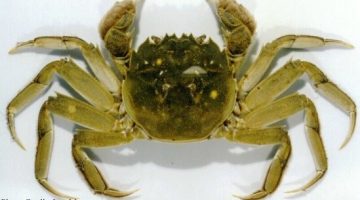
R-11-NSI Early Detection and Rapid Response Plan for the Invasive Chinese Mitten Crab

Northeast Sea Grant Programs are coordinating a regional effort to prevent the Chinese Mitten Crab from becoming established in Gulf of Maine waters. Preventing new nonnative and invasive species from becoming established in marine waters has long been a challenge, and the difficulty and cost of eradicating established nonnative species is well documented. Fortunately, we […]

Read more

DV-12-17 Microplastics pollution monitoring project

Susan Shaw Marine Environmental Research Institute 55 Main Street Blue Hill, ME 04614 207.374.2135 sshaw@meriresearch.org The world’s oceans are littered with plastic debris. With the 1997 discovery of staggering amounts of plastic collecting in the Pacific Ocean and North Atlantic gyres emerged the question of what happens to these plastics as they break down, since plastic particles […]

Read more