
MSG Publications
2025
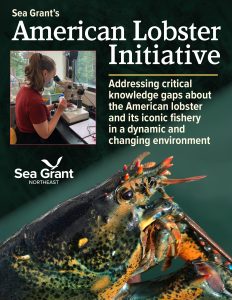
Sea Grant’s American Lobster Initiative
This document summarizes the findings from 10 regional community The American Lobster Initiative Factsheet outlines the program’s efforts to address critical knowledge gaps and build resilience for the American lobster fishery in the face of a rapidly changing marine environment. The initiative supports a national research competition and a regional extension network in the Northeast, focusing on the Gulf of Maine, Georges Bank, and southern New England.
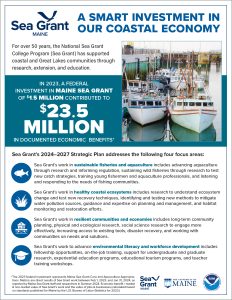
Maine Sea Grant By Numbers
The Maine Sea Grant (MSG) program is dedicated to supporting the responsible use and conservation of coastal resources to sustain thriving communities and ecosystems. This factsheet points out, among other highlights, how a federal investment of $1.5 million yielded $23.5 million in documented economic benefits, underscoring its role as a vital economic engine.
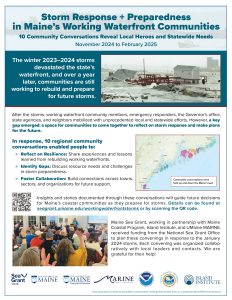
Storm Response+ Preparedness in Maine’s Working Waterfront Communities
This document summarizes the findings from 10 regional community conversations held between November 2024 and February 2025, convened in response to the devastating winter 2023-2024 storms that heavily damaged Maine’s working waterfront. The goal of the conversations, which included 450 participants from over 40 coastal towns, was to create a space for communities to reflect on their resilience, share lessons learned, identify resource gaps, and foster collaboration for future preparedness.
Lincoln County Social Resilience Project Executive Summary
The Lincoln County Social Resilience Project assessed the capacity of five local sectors (business, conservation, emergency management, municipal, and social services) to support socially vulnerable residents during extreme storm events. Workshops presented by community leaders highlighted critical impacts, including extended Power Outages, increased Food Insecurity, crucial Communication Gaps, and Challenges with Accessing Resources. To build resilience, the leaders prioritized strategies such as utilizing multiple communications, expanding storm preparedness education, and developing volunteer Networks.
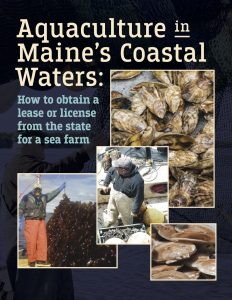
Aquaculture in Maine’s Coastal Waters
The Lincoln County Social Resilience Project assessed the capacity of five local sectors (business, conservation, emergency management, municipal, and social services) to support socially vulnerable residents during extreme storm events. Workshops presented by community leaders highlighted critical impacts, including extended Power Outages, increased Food Insecurity, crucial Communication Gaps, and Challenges with Accessing Resources. To build resilience, the leaders prioritized strategies such as utilizing multiple communications, expanding storm preparedness education, and developing volunteer Networks.
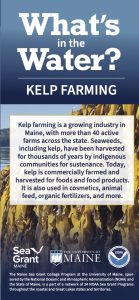
What’s in the Water? Kelp Farming
What’s in the Water? Kelp Farming describes what to look for on the surface of the ocean, and what goes on underneath as well as how kelp is grown and farmed in Maine’s waters.
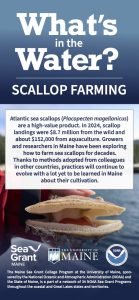
What’s in the Water? Scallop Farming
What’s in the Water? Scallop Farming describes what to look for on the surface of the ocean, and what goes on underneath as well as how kelp is grown and farmed in Maine’s waters.
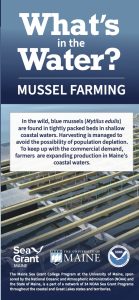
What’s in the Water? Mussel Farming
What’s in the Water? Mussel Farming describes what to look for on the surface of the ocean, and what goes on underneath as well as how kelp is grown and farmed in Maine’s waters.
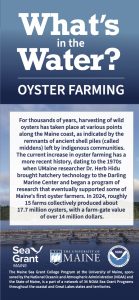
What’s in the Water? Oyster Farming
What’s in the Water? Oyster Farming describes what to look for on the surface of the ocean, and what goes on underneath as well as how oysters are grown and farmed in Maine’s waters.
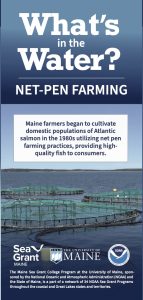
What’s in the Water? Net-Pen Salmon Farming
What’s in the Water? Net-Pen Farming describes what to look for on the surface of the ocean, and what goes on underneath as well as how salmon are raised and farmed in Maine’s waters.
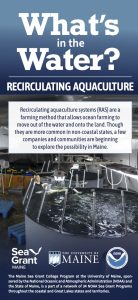
What’s in the Water? Recirculating Aquaculture
What’s in the Water? Recirculating Aquaculture describes how fish can be raised outside the oceans, and how Maine can benefit from this important technique.
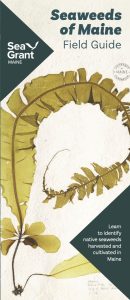
Seaweeds of Maine Field Guide
Trifold brochure with images and descriptions of ten of Maine’s multipurpose seaweeds.
HTML accessible version to come
2024
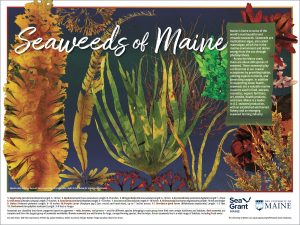
Seaweeds of Maine poster
Printed poster adaptation of 2023 Seaweeds of Maine calendar with artwork by John Ewen
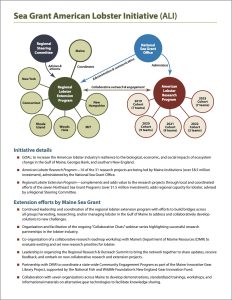
American Lobster Initiative infographic
This document describes the Sea Grant American Lobster Initiative (ALI) , a program with the goal of increasing the American lobster industry’s resilience to the impacts of ecosystem change.
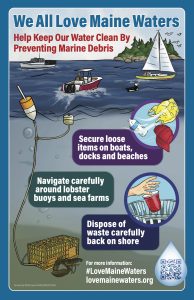
We All Love Maine Waters poster
“We All Love Maine Waters,” is a part of a print and social media campaign by lovemainewaters.org to make the public aware of the ways in which they could participate in keeping Maine waters debris-free.
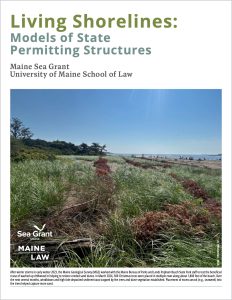
Living Shorelines: Models of State Permitting Structures
This publication, a collaborative effort by Maine Sea Grant and the University of Maine School of Law, examines the permitting structures for living shoreline projects in various coastal states. It identifies challenges in applying existing legal frameworks to these nature-based solutions and provides models from states like Connecticut, New York, Maryland, and Virginia to inform Maine’s regulatory approach.
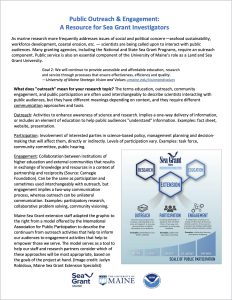
Public Outreach & Engagement: A Resource for Sea Grant Investigators
Public Outreach & Engagement: A Resource for Sea Grant Investigators is a guide for scientists addressing issues of social and political concern to help them effectively interact with public audiences. It clarifies the distinctions between the often-interchangeable terms outreach, participation, and engagement and introduces the Scale of Public Participation.

Marine Debris Initiative
HTML accessible page to come
This brochure provides an overview of the Marine Debris Initiative, which focuses on strategies to prevent and remove persistent solid waste, known as marine debris, from ocean and Great Lakes environments. The publication details ways individuals can help, such as participating in cleanups and reducing single-use plastic reliance.
The initiative involves several projects and partnerships aimed at addressing the problem at its source and through community action. This includes a research focus on developing sustainable, non-plastic alternatives for food packaging, such as materials derived from wood, seaweed, and lobster shells, and promoting reusable packaging systems.
.
2023

Green Sea Urchin Aquaculture in the Northeast US
The document outlines the major processes, equipment, and considerations for farming this species in the Northeast US. It details the biology of green sea urchins and the full production cycle, covering hatchery operations, as well as various grow-out methods for reaching market size. The report also covers practical considerations such as permit requirements, disease, handling, and marketing strategies for this high-value product.

Report from 2023 Seaweed Symposium
The Status and Insights for Seaweed in the United States: Report from the 2023 National Seaweed Symposium summarizes the rapidly growing U.S. seaweed sector, documenting the proceedings of an event that convened over 250 leaders from across the country. It serves as a comprehensive reference for the status of the industry in 2023, outlining key priorities and insights on topics like regulations, market opportunities, and the role of seaweed in climate change mitigation